
Going the Way of the Mangrove
How Tourism is Killing Negril
Negril is dying the same death as its mangroves: slowly, profitably, and largely unnoticed.
I discovered this during four trips in five months, when I finally saw what had been hiding in plain sight: the spindly roots clawing at earth beside traffic lights, the remnants of what was once the Negril Great Morass. These boulevard mangroves are the red and white species. They provide coastal protection and biodiversity but are easy to miss along "The Strip," where the main road curves inland through a congestion of buildings. They're fragments of an ecologically sensitive wetland ecosystem that fish like snapper and shrimp species depend on as nursery habitats.
Like most Jamaicans, I once dismissed mangroves as places where trees had exposed roots and the dirty-looking water looked dirty was a symptom of "third world" infrastructure. I had no idea they were the foundation of coastal life, or that they have been systematically destroyed since the 1950s to make way for tourism, agriculture, and housing.
The pattern is everywhere once you know to look: mangroves cleared for horseback riding on beaches, for sand harvesting, for accommodating growing numbers of visitors. Now, with beachfront properties mostly privatized and limited coastline available, new developments push into the landlocked mangrove side. What was once marketed in the 1970s as a laid-back alternative to north coast concrete has become another site of extraction, just with better branding.
The Economics of Invisibility
The numbers tell the story plainly. Resorts in Negril average $150 USD per night in the off season. That’s about JM$23,850, meanwhile the minimum wage for a 40-hour week just reached JM$16,000 in June. My own stay was only possible because Jamaican residents get 50% off during slow season, turning an impossible vacation into a very expensive one.
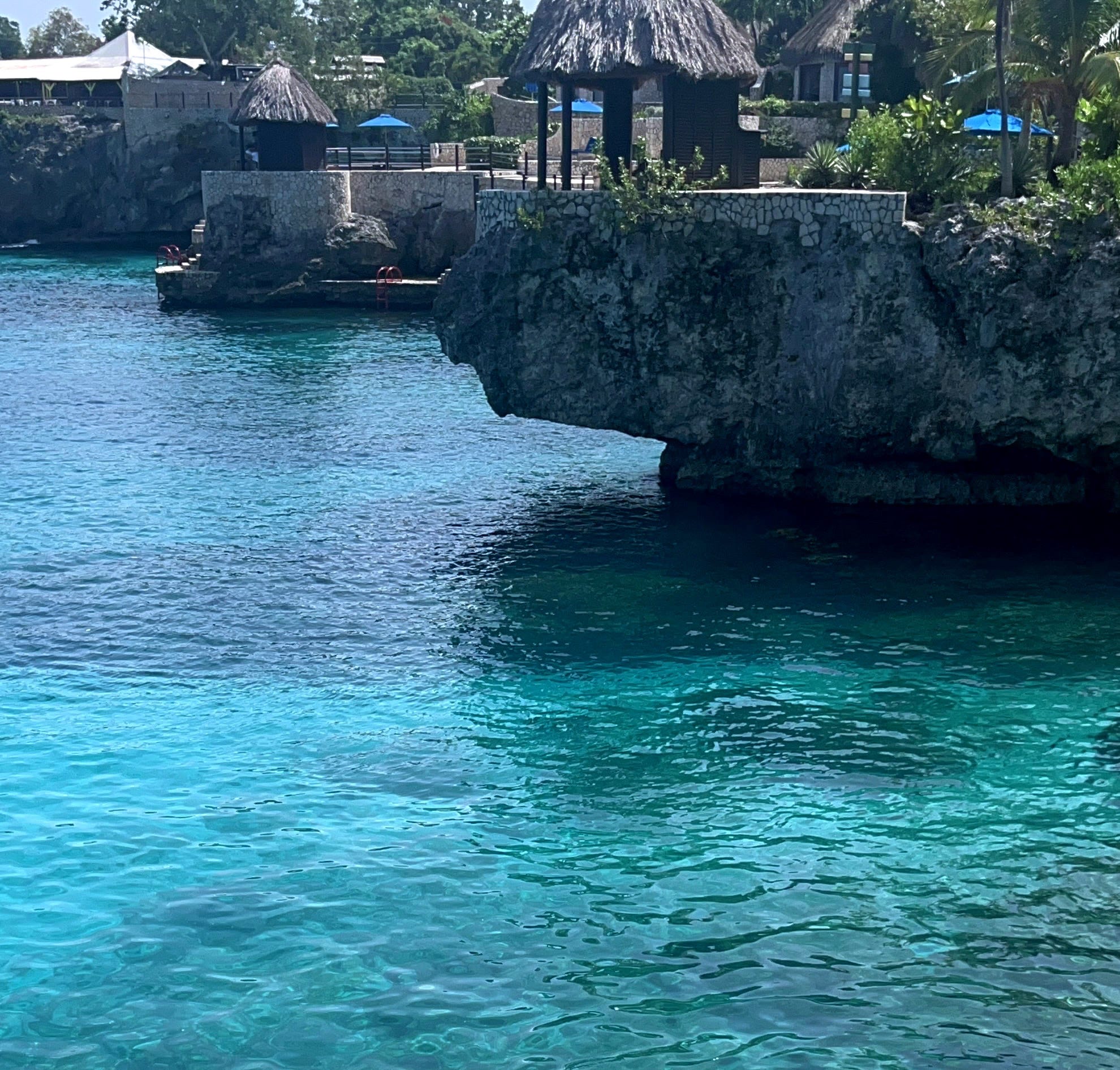
But the real revelation came at the resort itself. I stayed in a clifftop villa overlooking the Caribbean Sea, where crashing waves foamed white before retreating into a dozen shades of blue. At night, with Kingston’s light pollution far behind me, the sky and sea mirrored each other in velvet and sequins. I slept outside half the night. Pulling my blanket inside at 3am, I looked up: a cathedral of stars. Transfixed, I thought, every Jamaican should see this.
The property claims half a mile of jagged limestone cliffs lined with villas, an infinity pool, and restaurant seating. Lush vegetation flows along serpentine paths that force you to acknowledge other guests, unless they're white, in which case you become invisible.
That rudeness is not a bug by some tourists, its a feature of how colonial tourism functions: white visitors occupy space like dem own it, while Black bodies, even guests, register as part of the scenery. I wanted to yell "I live here!" but instead found myself greeting staff , trained by upbringing to smooth over the discomfort.
Directly across from this resort's fortress-like gates, little shacks stood, seemingly leaning on each other for support. There, mostly older people sold imported tchotchkes and polyester garments in red, green, and gold. None has toilets or proper ventilation. This stark contrast is not treated as an indictment of a broken system, instead it’s marketed as charm, the authentic spice to flavour to the tourist experience.
Beaches as Private Property
Seven Mile Beach reveals how privatization works in practice. This collection of connected bays serves as the backyard for properties along the Strip. While a few lots maintain public access because they’re either government-owned or beachfront businesses, all infrastructure belongs to hotels. Local groups literally can't use parts of the beach because hotels line the shore with loungers, leaving about ten feet of "public" space for everyone else.
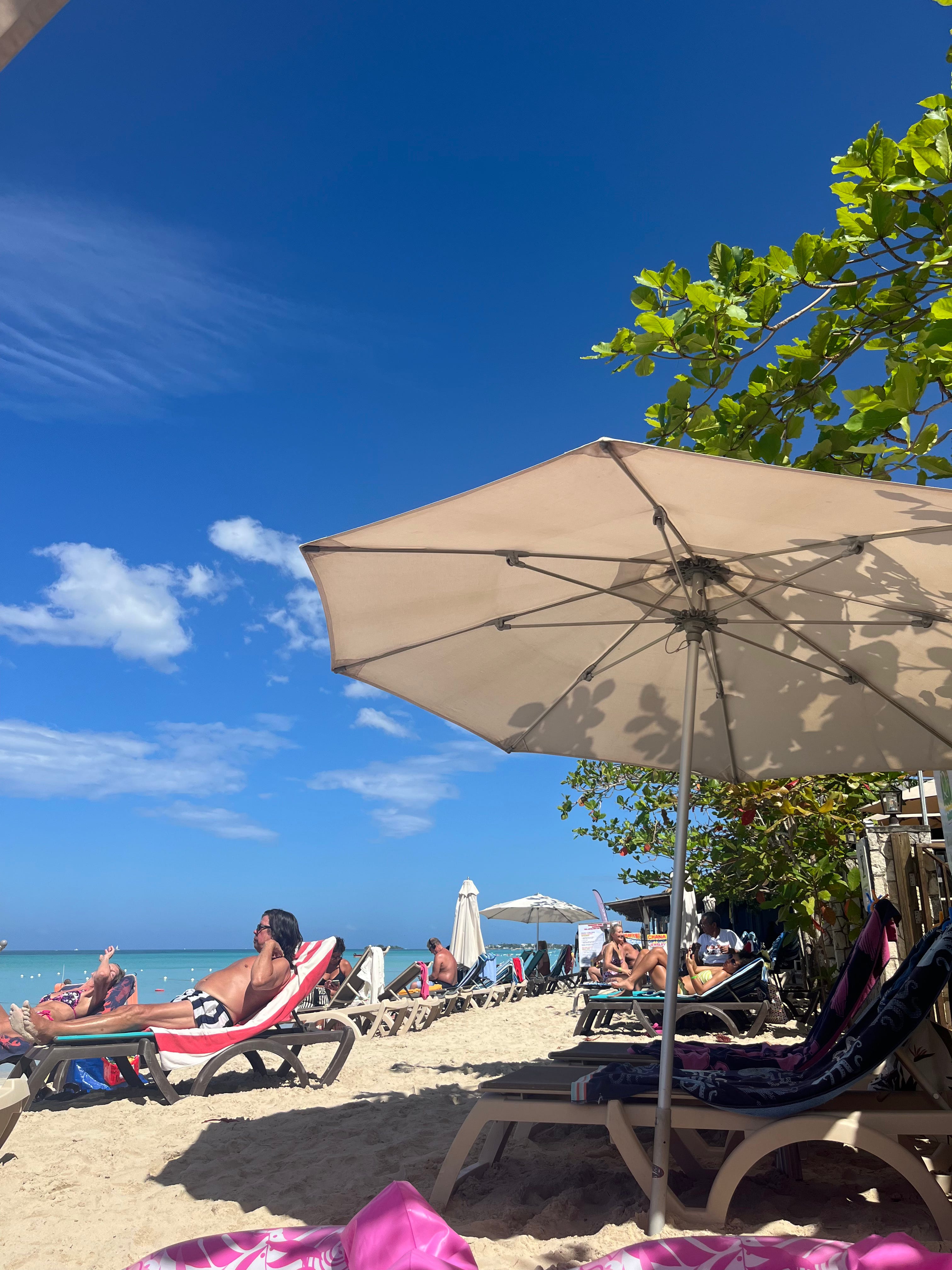
Day after day, the “everyone else” trudge sand beneath punishing sun: "Fruits for you today, beautiful?" They display plastic bags of sliced pawpaw, pineapple, and apple. "Looking for a bracelet, nicelady?" Bob Marley cover musicians perform, though they seem to avoid "Redemption Song.” I imagine tourists don’t want to be serenaded as “Ol’ pirates,” who “rob I [and] sold I to the merchant ship.”
Unlike tourists, these vendors don't change with the waves. I've visited Negril enough in recent months to recognise their faces, to understand that their smiles mask economic desperation. They do the work of creating paradise for people who can afford to temporarily inhabit it, then return to communities without adequate infrastructure, healthcare, or educational opportunities funded by tourism revenues.
The Colonial Continuation
But it’d be foolish to think that the current effects are accidental and thus can improved through reform. Tourism operates on the same extraction logic that defined the Jamaican colony. Where sugar plantations once enriched distant owners while impoverishing local communities, tourism now creates wealth for international hotel chains, foreign (and some local) property developers, and overseas investors while Jamaicans serve as poorly paid1 labor in their own country.
Norman Manley Boulevard has expanded and improved for rental cars and tour buses, not pedestrians. West End Road's antagonistic lack of sidewalks forces locals to dodge traffic while tourists enjoy clifftop views. A new hospital on the strip caters to tourists while locals try their luck at Cornwall Regional over an hour away. Under tourism, infrastructure serves capital, not community.
The environmental destruction parallels the social destruction. Both mangroves and local communities are treated as obstacles to development instead of the foundations of sustainable life. Mangroves, like local communities, provide essential services like coastal protection, cultural continuity, economic stability. Services markets don't value until they're gone.
Imagining Alternatives: From Tourism to Denizenism
What would it look like to center local communities rather than visitor experiences? I propose we rebrand: instead of “locals,” which implies passive existence, we need “denizens.” Denizens are people with intentional, active relationships to place. Instead of tourism development, we need denizenism.
Picture a Denizen Sustainability Fund replacing the Tourism Enhancement Fund, offering resources to businesses that improve community access to and stewardship of natural resources. The Tourism Product Development Corporation becomes the Denizen Producers Development Corporation, supporting artisans and culture keepers. Infrastructure serves residents first, with visitor access following sustainable community development.
Is it anti-tourism? Maybe. But it is pro-sustainability. Healthy communities create better experiences for everyone. The current model destroys the very qualities that make places like Negril attractive: environmental integrity, cultural authenticity, and genuine human connection.
I imagine that clifftop resort as a public park where families bring picnic blankets for sunset viewing, where villas become gazebos and paths widen for joggers. There would be enough space for everyone: denizens watching dolphins with their children, someone's music inevitably too loud because this is still Jamaica. The same beauty, but shared rather than hoarded.
The Mangrove Metaphor
Mangroves and Jamaican communities share a fate: both do the work of sustaining coastal paradise while being systematically destroyed for short-term profit. Both are resilient, adaptable, essential, and both are treated as expendable.
The mangroves I noticed at that traffic light are survivors, fragments of a once-vast ecosystem that protected Negril's coast and supported its marine life. Like the vendors walking Seven Mile Beach, like the artisans in those shacks without toilets, they persist despite policies designed to erase them.
But persistence isn't enough. Recognition isn't enough. We need economic and political systems that value what mangroves and communities actually provide, not just what they can be converted into.
Slowly but surely, Negril's people, its denizens, are going the way of the mangrove. The question is: will we notice before it's too late to change course, or will we wake up one morning to find that paradise was always an extraction site, and we were never meant to be anything more than the scenery?
One evening, I spoke to a guard at the resort and he told me this was one of few places—out of dozens—that actually had employees and not contractors. This resort keeps their staff employed year-round, even in the off season. At least, and this is the very least, they seem to be using their revenue for labour costs.